The Lilacs Recital Series

Every recital,

and everything played.

Since January 2022 we have presented 35 recitals and 2 anniversary celebrations in a private New York home. This is the complete record — every artist who has played here, and every note they played.


35
Recitals
2
Celebrations
28
Pianists
56
Composers

Twice

Two evenings below were larger than a recital — several artists, a full program and a dinner cooked for the room, for Rachmaninoff’s 150th birthday and for Ravel’s. The anniversaries →

2025–26 8 recitals

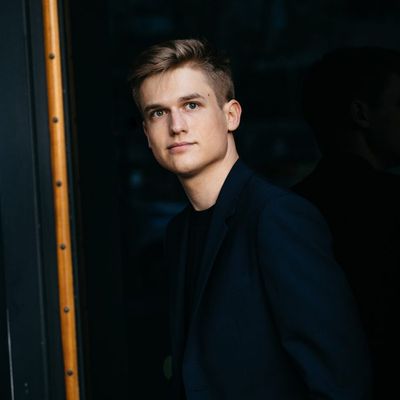
Illia Ovcharenko

037

Illia Ovcharenko

  1. Bortkiewicz — “Lied ohne Worte” and “Etude” from Op. 65; “Prelude” from Op. 6; Étude No. 3 “La brune”, Op. 29
  2. Beethoven / Liszt — Symphony No. 7, second movement
  3. Schumann — Études in Variation Form on a Theme by Beethoven, WoO 31
  4. Scarlatti — Keyboard Sonata in B minor, K. 87
  5. Liszt — Piano Sonata in B minor, S. 178
About Illia Ovcharenko

Praised as “technically flawless and impeccably musical” (International Piano), Ukrainian pianist Illia Ovcharenko is one of the world’s most celebrated young pianists. He is the laureate of the 2022 Honens International Piano Competition, which seeks to identify the “Complete Artist” – someone who demonstrates technical mastery, perseverance against adversity, and an understanding of musical text that is both intellectual and emotional.

Born in Chernihiv, Ukraine, Ovcharenko began formal piano studies at nine and gave his first concert at twelve on the stage of the National Philharmonic of Ukraine. At thirteen he moved to Kyiv, and later to Tel Aviv, for advanced training. He is currently finishing a master’s program with his longtime mentor, Arie Vardi, in Hannover.

Besides the Honens Prize, Ovcharenko has received prizes at more than twenty international competitions, including top prizes at the Busoni, New York, Hilton Head, and Horowitz piano competitions, as well as the Kissinger Sommer “Klavierolymp” and the Michelangeli Prize of the Eppan Piano Academy. He has appeared as a soloist with the Deutsche Symphonie-Orchester Berlin, Israel Philharmonic, Toronto Symphony, and Orchestre National d’Île-de-France, among others, and in recital at Carnegie Hall, the Elbphilharmonie Hamburg, Konzerthaus Berlin, Wigmore Hall, and Concertgebouw Amsterdam.

Ovcharenko’s latest album, Whispers & Thunder, was released on the Steinway label and named one of the best classical albums of 2025 by Gramophone, which described his playing as “iron hands cloaked in mink gloves.” International Piano called it “splendidly executed and smartly programmed.” His debut concerto recording, Manu Sinistra — a cycle of piano concertos for the left hand recorded with the MDR Symphony Orchestra and Oksana Lyniv — was released on the Pentatone label. His earlier solo album, Litany, released on Discauvers, was praised for its “very intelligently constructed program” and “perfectly mastered technique” (Classique c’est cool).

Recordings · Listen
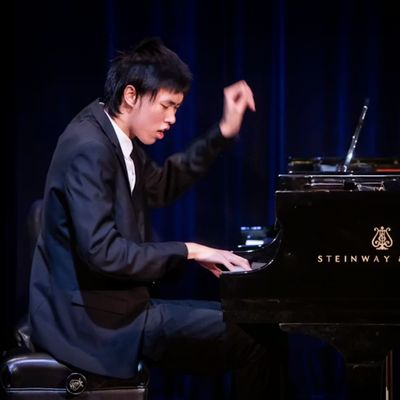
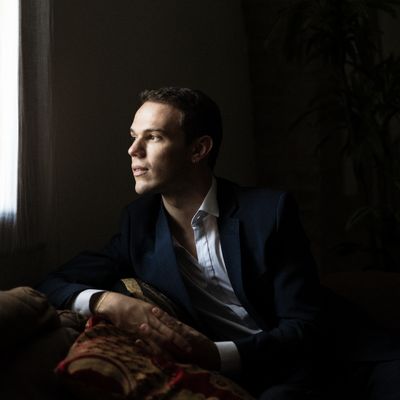
Jack Gao

036

Jack Gao

  1. Chopin — Preludes, Op. 28 Nos. 1–7
  2. Schubert — Piano Sonata in F-sharp minor, D. 571 (completed by Jack Gao)
  3. Bartók — Piano Sonata, Sz. 80 (BB 88)
  4. Rachmaninoff — Six Moments musicaux, Op. 16
About Jack Gao

Award-winning pianist Yang (Jack) Gao is building a distinguished career as a recitalist, composer, chamber musician, and concerto soloist. He rose to international prominence after winning First Prize at the 2023 Walter W. Naumburg International Piano Competition, one of the most prestigious piano competitions in the United States.

Jack began studying piano at the age of four and composition at nine. He trained at the Middle School attached to the China Conservatory of Music before pursuing advanced studies in the United States. At The Juilliard School, he has studied with Jerome Lowenthal and Emanuel Ax. This fall, he joins the Curtis Institute of Music as its first-ever master’s candidate in piano, where he will work with Robert McDonald.

His honors include top prizes at the Gina Bachauer International Piano Competition at Juilliard, the Munz Piano Competition, and the Bösendorfer Competition, among other international distinctions. In 2025, Martha Argerich invited him to perform in her festival in Hamburg, and personally selected him as laureate of the Steinway Prize, an honor recognizing exceptional pianists under thirty.

As a soloist, Jack has performed widely in China and North America and made his Carnegie Hall recital debut in 2024. His concerto appearances include John Corigliano’s Piano Concerto with the Juilliard Orchestra conducted by Simone Young and Sergei Rachmaninoff’s Piano Concerto No. 3 with the Orchestra of the China Conservatory of Music.

In addition to his performing career, Jack composes and frequently collaborates in chamber music settings, reflecting a broad musical approach that combines virtuosity, stylistic range, and creative curiosity.

Recordings · Listen
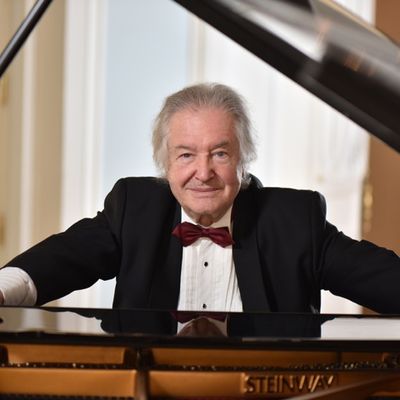
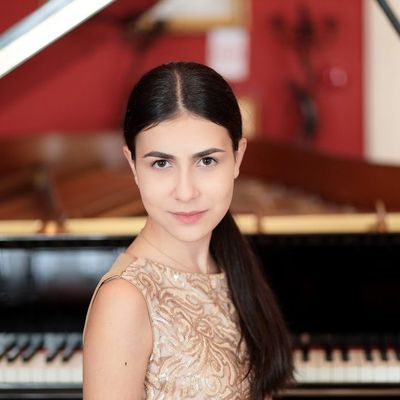
Alexandra Dovgan

035

Alexandra Dovgan

Eighteen years old. The largest audience in the series’ history.

  1. Chopin — Barcarolle in F-sharp major, Op. 60
  2. Chopin — Piano Sonata No. 3 in B minor, Op. 58
  3. Franck — Prélude, choral et fugue
  4. Prokofiev — Piano Sonata No. 2 in D minor, Op. 14
About Alexandra Dovgan

Alexandra Dovgan is recognized for her exceptional musical maturity, poetic sensitivity, and refined sound, qualities that have distinguished her as one of the most compelling young pianists of her generation. Born in 2007, she began her piano studies at the age of four and a half. At five, she joined the Academic Central Music School of the Moscow State Conservatory. She is currently continuing her education at the Ateneo de Música in Málaga. Her musical development has been deeply influenced by her creative relationship with Grigory Sokolov.

Alexandra is a prize-winner of multiple international piano competitions. At age ten she won a major Grand Prix in Moscow, with recordings of that performance broadcast worldwide on Medici.TV and YouTube.

She has performed in many of the world’s most prestigious concert halls, including the Philharmonie and Konzerthaus in Berlin, Théâtre des Champs-Élysées in Paris, Concertgebouw in Amsterdam, Konzerthaus in Vienna, Tonhalle in Zurich, Victoria Hall in Geneva, Konserthuset in Stockholm, Palau de la Música in Barcelona, Gulbenkian in Lisbon, and Teatro Colón in Buenos Aires.

Following her acclaimed recital at the Salzburg Festival, she has appeared with leading orchestras and conductors, including Gustavo Dudamel and the Mahler Chamber Orchestra, Paavo Järvi and the Tonhalle Orchestra Zurich, Ton Koopman and the Stockholm Philharmonic, Kazushi Ono and the Barcelona Symphony, and Pietari Inkinen with the Bergen Philharmonic.

In June 2024, she received the Prix Serdang from Rudolf Buchbinder and Adrian Flury in recognition of her achievements and already significant career.

Recordings · Listen
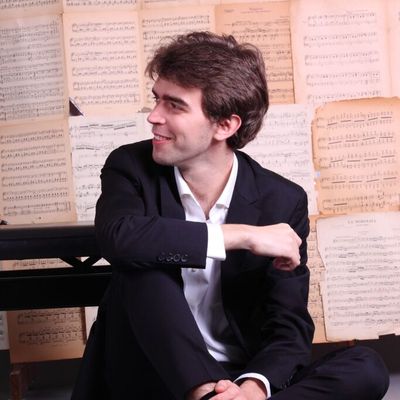
Gabriele Strata

034

Gabriele Strata

  1. Chopin — Valses, Op. 70 No. 2, Op. 64 No. 3, Op. 34 No. 1
  2. Chopin — Polonaise-fantaisie in A-flat major, Op. 61
  3. Schubert — Piano Sonata in A major, D. 959
About Gabriele Strata

Praised for a pianism of “extraordinary sensitivity and perfect technique” (Il Sole 24 Ore), Gabriele Strata stands among the most distinctive Italian pianists of his generation. Gramophone has noted his “serious-minded rhetorical style,” describing him as “an idea man and a strong personality” whose musical intentions translate effortlessly into sound.

Gabriele appears regularly in major concert seasons across Europe, the Americas, and Asia, with performances at the Berliner Philharmonie, Wigmore Hall, the Concertgebouw in Amsterdam, Sala Verdi in Milan, and Montréal’s Maison Symphonique. His repertoire spans from the Baroque to contemporary music, and he has collaborated with eminent conductors including Kent Nagano, Umberto Benedetti Michelangeli, and Xian Zhang.

His artistry has been recognized at leading international competitions, including the Concours Musical International de Montréal, where he received the Silver Medal, Audience Prize, and Chamber Music Prize in 2024, as well as First and Audience Prizes at the Rio de Janeiro International Piano Competition and the XXXV Premio Venezia. He was further honored by Teatro La Fenice with the Una vita nella musica – giovani award and gained international attention for his performances at the International Fryderyk Chopin Piano Competition, praised for their narrative depth and poetic clarity.

Trained by Boris Berman, Benedetto Lupo, and Ronan O’Hora, Gabriele earned his Master of Music from Yale University at age 19 and later completed Artist Diplomas at the Guildhall School of Music & Drama in London and the Accademia Nazionale di Santa Cecilia in Rome. He is currently mentored by Julia Mustonen-Dahlkvist.

Recordings · Listen
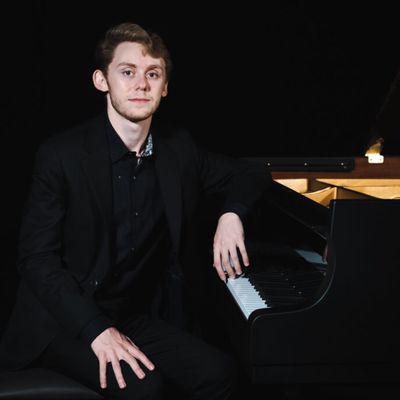
Albert Cano Smit

033

Albert Cano Smit

The Art of Fugue, broken open and threaded with Fauré, Liszt and Granados.

  1. Bach — Contrapunctus I from The Art of Fugue, BWV 1080
  2. Bach — Contrapunctus IV from The Art of Fugue, BWV 1080
  3. Fauré — Nocturne No. 6 in D-flat major, Op. 63
  4. Fauré — Ballade in F-sharp major, Op. 19
  5. Bach — Contrapunctus VII per augmentationem et diminutionem, from The Art of Fugue
  6. Bach — English Suite No. 3 in G minor, BWV 808
  7. Bach — Contrapunctus IX alla duodecima, from The Art of Fugue
  8. Granados — “Quejas, o la maja y el ruiseñor” from Goyescas
  9. Granados — “El pelele” from Goyescas
About Albert Cano Smit

A musician who has been praised as “a moving young poet” (Le Devoir), Spanish/Dutch pianist Albert Cano Smit is noted for his captivating performances, storytelling quality and nuanced musicality. He is the First Prize winner of the 2019 Young Concert Artists Susan Wadsworth International Auditions and the First Prize winner of the 2017 Walter W. Naumburg Piano Competition.

He has appeared as a soloist with many orchestras, including the Seattle Symphony, Las Vegas Philharmonic, San Diego Symphony, Montréal Symphony, Orchestra of St Luke’s, and Barcelona Symphony.

Recital highlights have included his Carnegie Hall debut, his Merkin Concert Hall debut, and recitals at San Francisco’s Herbst Theatre, Paris’ Fondation Louis Vuitton (streamed live globally), the Kennedy Center, and Germany’s Rheingau Music Festival. He has been in residence at France’s Festival de Musique de Wissembourg, and was a piano fellow at Bravo! Vail Music Festival and Tippet Rise Art Center.

An advocate for new music, Albert has premiered numerous solo works commissioned for him by Stephen Hough, Miquel Oliu, and Katherine Balch. He has given four-hand performances with Jean-Yves Thibaudet, taken part in the Jupiter Chamber Players, and performed with artists such as Gary Hoffman, Pinchas Zukerman, Lun Li and Zlatomir Fung.

A polyglot who speaks five languages, Albert was born in Geneva and left home at 9 to join the Escolania de Montserrat choir school, where hours of rehearsal every day strongly affected his musical development. He completed an Artist Diploma and Master’s degree with Robert McDonald at The Juilliard School, where he was awarded the 2020 Rubinstein Prize for Piano. He also holds a BA in Piano Performance from the Colburn School, and is an alum of the Verbier Festival Academy and Ravinia Steans Institute.

Recordings · Listen
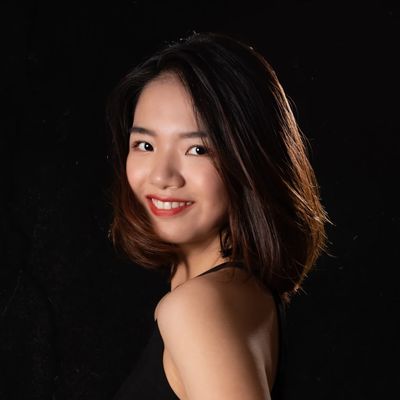
Simon Bürki

032

Simon Bürki

Included Rachmaninoff’s “Siren” — Lilacs — the song this series is named for.

  1. Schumann — Novellette in F-sharp minor, Op. 21, No. 8
  2. Granados — El fandango de candil
  3. Liszt — Hungarian Rhapsody No. 9 (“Carnival in Pest”) in E-flat major, S. 244/9
  4. Rachmaninoff — Prelude in G minor, Op. 23, No. 5
  5. Rachmaninoff — Prelude in A-flat major, Op. 23, No. 8
  6. Rachmaninoff — Prelude in D major, Op. 23, No. 4
  7. Rachmaninoff — Zdes’ khorosho (Here It Is Beautiful), Op. 21, No. 7, transcribed by Arcadi Volodos
  8. Rachmaninoff — Siren’ (Lilacs), Op. 21, No. 5, transcribed for solo piano
  9. Rachmaninoff — Étude-tableau in A minor, Op. 39, No. 2
  10. Rachmaninoff — Étude-tableau in E-flat minor, Op. 39, No. 5
  11. Rachmaninoff — Prelude in D-flat major, Op. 32, No. 13
About Simon Bürki

Swiss pianist Simon Bürki was born in St. Gallen, Switzerland, and was encouraged toward music by his grandmother, who helped spark the curiosity and drive that sustained his musical development.

He began piano studies at age five at the Classic and Jazz Music School in Kiev. He continued his training with masterclasses and advanced studies at the Central Music School of the Moscow Tchaikovsky Conservatory and later at the Conservatory itself. He currently studies at The Juilliard School with Sergei Babayan.

Simon is a laureate of multiple international competitions. Early in his career he won three prizes at the International Horowitz Competition for Young Pianists. He earned first prizes at the International Franz Liszt Competition for Young Pianists in Weimar and at the International Competition “A Step Towards Mastery” in St. Petersburg, as well as prizes at the Ricard Viñes and Kyiv International Piano Competitions.

He has performed widely in Europe and abroad, including engagements in Switzerland, Germany, France, Spain, Russia, and Ukraine, including appearances with the Zurich Chamber Orchestra at the Tonhalle Zurich and at the Annecy Classic Festival.

In 2023 Simon released his debut album Reminiscence, featuring works by Rachmaninoff, Scriabin, Tchaikovsky, Liszt, and Schumann.

Recordings · Listen
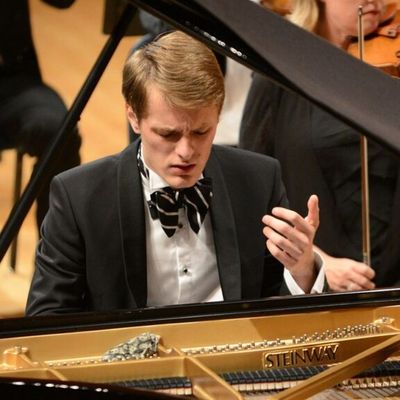
Mikhail Voskresensky

031

Mikhail Voskresensky

All Chopin, at ninety.

  1. Chopin — Two Polonaises, Op. 26
  2. Chopin — Three Nocturnes: Op. 15 Nos. 1–2 and Op. 27 No. 1
  3. Chopin — Four Mazurkas, Op. 24
  4. Chopin — Ballade No. 3 in A-flat major, Op. 47
  5. Chopin — Étude in C-sharp minor, Op. 25, No. 7
  6. Chopin — Three Waltzes, Op. 64
  7. Chopin — Four Mazurkas, Op. 17
  8. Chopin — Scherzo No. 2 in B-flat minor, Op. 31
About Mikhail Voskresensky

Mikhail Voskresensky proved an imposing, magnetic presence … passion, impetuosity, spontaneity and articulateness marked this recital.

Los Angeles Times

Renowned Russian pianist Mikhail Voskresensky has for more than 60 years continued an intensive schedule of concerts around the world. The top prize winner of many international piano competitions, including the first Van Cliburn International Piano Competition, Voskresensky has captivated audiences with his electrifying interpretations of the great piano literature of all styles.

Born in the city of Berdyansk, Ukraine, Voskresensky graduated from the Moscow Conservatory. His teachers were the famous Lev Oborin (first prize winner of the First Chopin Competition in Warsaw), Ilia Klyachko, Jacob Milstein, Boris Zemliansky, and Leonid Roizman (organ). Voskresensky’s career began with his performance of Chopin’s Piano Concerto No. 2 in Warsaw with the Bolshoi Theatre orchestra under the baton of Yevgeny Svetlanov. In 1957, he premiered Shostakovich’s Piano Concerto No. 2 at the Prague Spring Festival in the presence of the composer, who highly esteemed his performance.

Voskresensky’s YouTube channel “Mikhail Voskresensky – pianist” includes more than 100 videos and recordings of his recitals and concertos with orchestras. His most recent recordings: all 27 piano concertos of Mozart, all 5 piano concertos of Beethoven along with the Choral Fantasy, and many recitals.

Voskresensky is the distinguished professor of the Moscow State Tchaikovsky Conservatory and chair of its piano faculty. Since 1992 he has also served as the guest professor of Toho Gakuen School of Music in Tokyo. His pupils have won more than 120 international prizes, including 61 gold medals. He has judged many international competitions as well, including the Tchaikovsky and Scriabin (as chairman of the jury) competitions in Moscow.

Among many other awards, Voskresensky has been honored with the People’s Artist of Russia (1989), the highest artistic recognition in Russia; membership in the Japanese order of The Rising Sun; the Russian Imperial Order of Saint Anna; and the Nikolai Rubinstein Gold Medal of the Moscow Conservatory.

Voskresensky left Russia with his family as a protest against the war in Ukraine and immigrated to the United States in August 2022.

Recordings · Listen
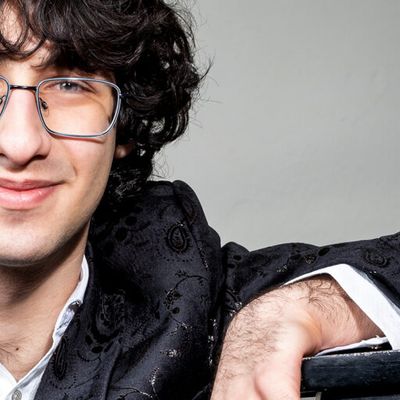
Kiron Atom Tellian

030

Kiron Atom Tellian

Weeks before his Carnegie Hall debut. Scriabin and Chopin études woven into one cycle.

  1. Scriabin — Piano Sonata No. 2, Op. 19 (Sonata-Fantasy)
  2. Chopin and Scriabin — Études from Opp. 25, 42, 8 and 65, interleaved
  3. J. Strauss (arr. Schulz-Evler) — Arabesques on “The Beautiful Blue Danube”
About Kiron Atom Tellian

Austrian pianist and composer Kiron Atom Tellian has quickly established himself as one of the most compelling young artists of his generation. Praised for his artistry, imagination, and commanding presence at the keyboard, he has already appeared on major stages across Europe, the United States, and South America, with an international career that continues to expand.

Tellian is the recipient of numerous awards, including first prize and the Haydn Prize at the 17th Ettlingen International Piano Competition, the grand prize and special awards at the X Savshinsky International Music Competition in St. Petersburg, and three first prizes at the Rosalyn Tureck International Bach Competition in New York. He has also won the Grand Prize at the Nashville International Chopin Competition, along with multiple distinctions at the Borderland Chopin International Competition.

In Fall 2024, Tellian won the Young Concert Artists Susan Wadsworth International Auditions, one of the world’s most prestigious career-launching platforms for young musicians. Along with this victory, he received eight special prizes, leading to major concert opportunities and career support throughout the United States and beyond.

Born in Vienna, Tellian began his piano studies at the University of Music and Performing Arts Vienna at the age of seven, making his orchestral debut at nine. He is currently completing his Bachelor’s degree at The Juilliard School, where he studies with Emanuel Ax, following earlier studies with Sergei Babayan. He is a proud recipient of the Kovner Fellowship, which fully supports his studies at Juilliard.

Recordings · Listen
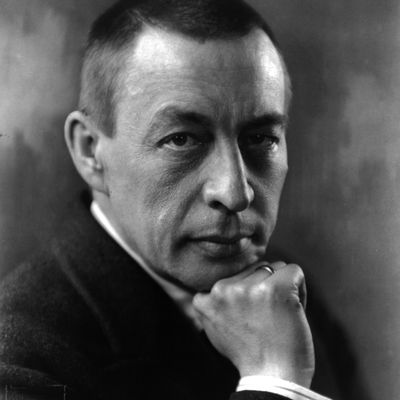
2024–25 6 recitals · 1 special event

Anthony Ratinov

029

Anthony Ratinov

Chopin and Scriabin alternating, tracing one composer’s hold on the other.

  1. Chopin — Waltz in A-flat major, Op. 42
  2. Scriabin — Prelude in C major, Op. 13, No. 1
  3. Scriabin — Prelude in A minor, Op. 13, No. 2
  4. Chopin — Nocturne in B major, Op. 62, No. 1
  5. Scriabin — Prelude in B major, Op. 16, No. 1
  6. Scriabin — Prelude in E major, Op. 15, No. 4
  7. Chopin — Polonaise in F-sharp minor, Op. 44
  8. Scriabin — Prelude in B major, Op. 27, No. 2
  9. Chopin — Scherzo No. 3 in C-sharp minor, Op. 39
  10. Chopin — Prelude in D-flat major, Op. 28, No. 15
  11. Scriabin — Prelude in D-flat major, Op. 31, No. 1
  12. Chopin — Ballade No. 3 in A-flat major, Op. 47
  13. Scriabin — Prelude in A minor, Op. 51, No. 2
  14. Chopin — Polonaise-fantaisie in A-flat major, Op. 61
About Anthony Ratinov

In support of The Scriabin Society of America

Award-winning pianist Anthony Ratinov has been praised internationally for his “precision, crystalline sharpness and great inner energy” (L’Ape Musicale) as well as his “class, style, technical mastery and solo prowess” (Beckmesser).

He is the winner of the 2nd Prize at the 2025 National U.S. Chopin Competition, the 3rd Prize at the 2024 Concours Musical International de Montréal, and the 2nd Prize at the Busoni International Piano Competition in 2023.

Anthony began studying piano at the age of four with his grandmother, Edit Ratinova, who taught at the renowned Gnessin Music School in Moscow for 45 years. He completed his graduate studies at the Yale School of Music studying with Boris Berman and Boris Slutsky, and previously studied at Yale University, where he majored in chemical engineering and graduated with honors, in addition to studying piano with Wei-Yi Yang. He was just awarded the Artist Diploma at Juilliard, and joined the studio of Robert McDonald.

About the Scriabin Society

The Scriabin Society of America, a 501(c)(3) private foundation, strives to deepen public appreciation of Scriabin’s music and expand understanding of his artistic and philosophical ideas through concerts, festivals and competitions, publications, symposia, and educational outreach.

Poet, philosopher, musician, mystic, visionary and egotist — Alexander Scriabin was the romantic to end Romanticism, a man whose creative imagination knew no bounds and who believed himself capable of re-booting global civilization. Scriabin was one of the most devoted followers of Chopin, and Chopin’s influence on Scriabin’s earlier works is unmistakable.

The Scriabin Society of America

Recordings · Listen
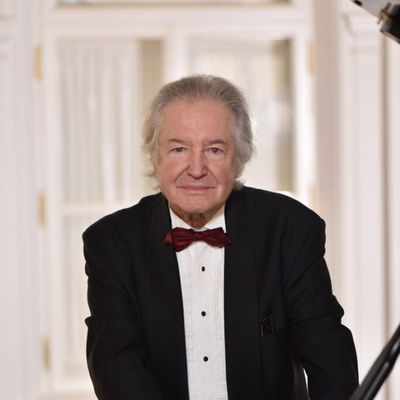
Ying Li

028

Ying Li

  1. Schumann — Arabesque in C major, Op. 18
  2. Schumann — Symphonic Études, Op. 13
  3. Albéniz — “Evocación” from Iberia, Book I
  4. Albéniz — “Triana” from Iberia, Book II
  5. Ravel — La valse, transcribed for solo piano
About Ying Li

Renowned for her “graceful, lyrical” playing (Cleveland Classical), the twenty-seven-year-old Chinese pianist Ying Li was the first prize winner of the 2021 Young Concert Artists Susan Wadsworth International Auditions.

Ying Li has performed with major orchestras (Philadelphia Orchestra, Accademia Teatro alla Scala, NWD Philharmonie, New Jersey Symphony Orchestra, Russische Kammerphilharmonie St. Petersburg) in prestigious concert venues (Teatro alla Scala, Verizon Hall / Kimmel Cultural Campus Philadelphia, Chicago Cultural Center, ACT Concert Hall Hamamatsu). As a chamber musician, she has performed at the Verbier Festival, Ravinia’s Steans Institute, La Jolla Music Society and the Great Lakes Chamber Music Festival.

Recent recital engagements include Sala Verdi in Milan, Hammerklavier International Piano Festival in Barcelona, Musica Insieme Bologna, Teatro Alighieri in Ravenna, Fazioli Pianoforti in Sacile, and the C. Bechstein Series at the Konzerthaus in Berlin. Ying was also featured on WQXR’s “Eine kleine Birthday-musik,” a free, all-Mozart livestreamed concert from The Greene Space in New York City, to celebrate Mozart’s 266th birthday.

Ying began piano lessons at age five in China, and was a student at the Elementary School division of the Central Conservatory of Music in Beijing, then moved to Philadelphia in 2012, at age fourteen, to study at the Curtis Institute of Music. She completed her master’s degree in 2021 as well as the Artist Diploma Program in 2024 at The Juilliard School with Robert McDonald.

Recordings · Listen
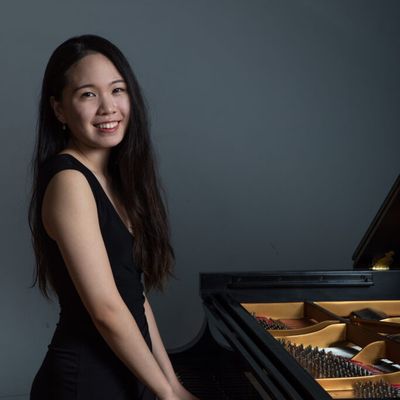
Ravel’s 150th Birthday Celebration

027

Ravel’s 150th Birthday Celebration

special event

All-Ravel, on his 150th birthday, with a Basque dinner. Henry Kramer · Nadejda Vlaeva · Claire Bourg, violin · Leland Ko, cello · Vyacheslav Gryaznov.

  1. Ravel — Le tombeau de Couperin (Henry Kramer)
  2. Ravel — Piano Trio (Nadejda Vlaeva, Claire Bourg, Leland Ko)
  3. Ravel — Piano Concerto for the Left Hand (Vyacheslav Gryaznov)

The evening in full →

Henry Kramer

026

Henry Kramer

  1. Schubert — Piano Sonata in A major, D. 664, Op. posth. 120
  2. Liszt — Piano Sonata in B minor, S. 179
  3. Debussy — L’isle joyeuse, L. 106
About Henry Kramer

Praised by The Cleveland Classical Review for his “astonishingly confident technique” and The New York Times for “thrilling [and] triumphant” performances, Henry Kramer is developing a reputation as a musician of rare sensitivity who combines stylish programming with insightful and exuberant interpretations.

In 2016, he garnered international recognition with a Second Prize win in the Queen Elisabeth Competition in Brussels. He was awarded a 2019 Avery Fisher Career Grant by Lincoln Center — one of the most coveted honors bestowed on young American soloists.

Henry began playing piano at the relatively late age of 11. One day, he found himself entranced by the sound of film melodies as a friend played them on the piano, inspiring him to teach himself on his family’s old upright. His parents enrolled him in lessons shortly thereafter, and within weeks, he was playing Chopin and Mozart.

Henry has performed “stunning” solo recital debuts at Alice Tully Hall as the recipient of The Juilliard School’s William Petschek Award, as well as at Amsterdam’s Concertgebouw. At his Philadelphia debut, Peter Dobrin of The Philadelphia Inquirer remarked, “the 31-year-old pianist personalized interpretations to such a degree that works emerged anew. He is a big personality.”

A versatile performer, Henry has been featured as soloist with orchestras around the world, including the National Belgian Orchestra, Brussels Philharmonic, Calgary Philharmonic, Shanghai Philharmonic, Bilkent Symphony Orchestra in Ankara, the Portland (Maine) Symphony Orchestra, and the Orchestre Métropolitain de Montréal. He has soloed under the batons of Marin Alsop, Jan Pascal Tortelier, and Stéphane Denève.

Henry graduated from The Juilliard School, where he worked with Julian Martin and Robert McDonald. He received his Doctorate of Musical Arts from the Yale School of Music under the guidance of Boris Berman. His teachers trace a pedagogical lineage extending back to Beethoven, Chopin and Busoni.

Henry is a Steinway Artist, and his first recording, dedicated to Liszt oratorio transcriptions, was released on the NAXOS label.

Recordings · Listen
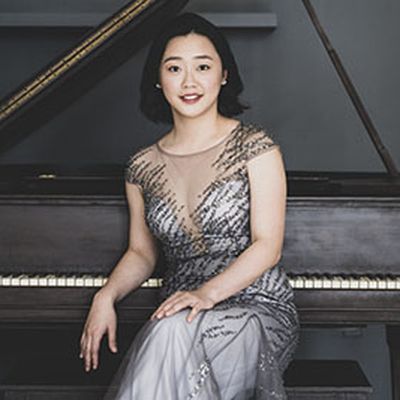
Sophia Liu

025

Sophia Liu

Sixteen years old, a student of Dang Thai Son.

  1. Liszt — Sonetto 123 del Petrarca in A-flat major, S. 161 No. 6, from Années de pèlerinage II
  2. Liszt — Réminiscences de Norma, S. 394
  3. Chopin — Andante spianato et Grande polonaise brillante in E-flat major, Op. 22
  4. Chopin — Ballade No. 1 in G minor, Op. 23
  5. Chopin — Nocturne in G major, Op. 37, No. 2
  6. Chopin — Variations on “Là ci darem la mano”, Op. 2
About Sophia Liu

One of the most talented students I have ever worked with in my 35-year teaching career.

Dang Thai Son

Sophia Liu was born in Shanghai in 2008, and moved to Japan at the age of 2. She started learning piano at age 4 and began performing shortly afterward.

Sophia moved to Montreal at age 7, where she currently resides. She has been studying piano with the world-renowned Professor Dang Thai Son since the age of 9.

Her recent awards include the gold medal at the 18th Ettlingen Piano Competition in Germany, first prize at the 2023 Thomas & Evon Cooper International Competition, and second prize at the Arturo Benedetti Michelangeli Competition in 2023.

At the age of 16, she had already given numerous recitals and concerts around the world and collaborated with many renowned orchestras, including the Cleveland Orchestra, the Orchestre Symphonique de l’Isle, and the Sinfonia Varsovia Orchestra. In 2025, Sophia will perform with the NHK Symphony Orchestra in Tokyo and Osaka as a guest soloist.

In 2024, Sophia gave performances at the Duszniki International Chopin Festival in Poland, the Festival International de Piano de La Roque d’Anthéron in France, and the International “Chopin and his Europe” Festival in Warsaw. She will perform at the Fondation Louis Vuitton in Paris in January 2025, as well as La Folle Journée de Nantes, in Geneva, and the Piano à Saint-Ursanne Festival, and will tour Europe and Asia.

Recordings · Listen

Anna Fedorova

024

Anna Fedorova

For the foundation the pianist runs in The Hague with her husband, the double bassist Nicholas Schwartz.

  1. Ravel — Gaspard de la nuit
  2. Chopin — Nocturne in C-sharp minor, Op. 27, No. 1
  3. Mussorgsky — Pictures at an Exhibition
About Anna Fedorova

In support of The Davidsbündler Foundation

From an early age, the Ukrainian pianist Anna Fedorova showed an innate musical maturity and amazing technical abilities. She regularly performs at the world’s most prestigious concert halls such as the Concertgebouw in Amsterdam, New York’s Carnegie Hall and Lincoln Center, Théâtre des Champs-Élysées in Paris, Bunka Kaikan in Tokyo, and London’s Barbican Centre and Royal Albert Hall.

As a soloist, Anna has performed with many wonderful orchestras around the world. Nicknamed the “house pianist” of the Concertgebouw, Anna has given over 45 concerts there, often broadcast live. She is a regular guest at leading music festivals such as the Verbier and Menuhin Festivals in Switzerland, Stift Music Festival in the Netherlands, Festival de Sintra in Portugal, and Ravinia Festival in the US.

Anna graduated from the Lysenko School of Music in Kyiv and the Accademia Pianistica in Imola, Italy. She received her Master’s degree and Artist Diploma at the Royal College of Music, London.

About the Davidsbündler Foundation

In 2022, Anna and double bassist Nicholas Santangelo Schwartz of the Concertgebouw founded the Davidsbündler Music Academy and Foundation in The Hague. It offers an intensive and innovative method of high-level classical music education to dedicated pianists and string players.

Before the Academy’s doors officially opened in September 2022, the Davidsbündler Foundation had already begun providing top-quality musical education to Ukrainian refugees who had fled to the Netherlands. The Foundation awards scholarships to deserving low-income and under-represented students.

The Davidsbündler Foundation

Recordings · Listen Also

Mikhail Voskresensky

023

Mikhail Voskresensky

  1. Beethoven — Piano Sonata No. 25 in G major, Op. 79
  2. Mozart — Fantasia in C minor, K. 396
  3. Grieg — Piano Sonata in E minor, Op. 7
  4. Scriabin — Deux Poèmes, Op. 32
  5. Chopin — Piano Sonata No. 3 in B minor, Op. 58
About Mikhail Voskresensky

Mikhail Voskresensky proved an imposing, magnetic presence … passion, impetuosity, spontaneity and articulateness marked this recital.

Los Angeles Times

Renowned Russian pianist Mikhail Voskresensky has for more than 60 years continued an intensive schedule of concerts around the world. The top prize winner of many international piano competitions, including the first Van Cliburn International Piano Competition, Voskresensky has captivated audiences with his electrifying interpretations of the great piano literature of all styles.

Born in the city of Berdyansk, Ukraine, Voskresensky graduated from the Moscow Conservatory. His teachers were the famous Lev Oborin (first prize winner of the First Chopin Competition in Warsaw), Ilia Klyachko, Jacob Milstein, Boris Zemliansky, and Leonid Roizman (organ). Voskresensky’s career began with his performance of Chopin’s Piano Concerto No. 2 in Warsaw with the Bolshoi Theatre orchestra under the baton of Yevgeny Svetlanov. In 1957, he premiered Shostakovich’s Piano Concerto No. 2 at the Prague Spring Festival in the presence of the composer, who highly esteemed his performance.

Voskresensky’s YouTube channel “Mikhail Voskresensky – pianist” includes more than 100 videos and recordings of his recitals and concertos with orchestras. His most recent recordings: all 27 piano concertos of Mozart, all 5 piano concertos of Beethoven along with the Choral Fantasy, and many recitals.

Voskresensky is the distinguished professor of the Moscow State Tchaikovsky Conservatory and chair of its piano faculty. Since 1992 he has also served as the guest professor of Toho Gakuen School of Music in Tokyo. His pupils have won more than 120 international prizes, including 61 gold medals. He has judged many international competitions as well, including the Tchaikovsky and Scriabin (as chairman of the jury) competitions in Moscow.

Among many other awards, Voskresensky has been honored with the People’s Artist of Russia (1989), the highest artistic recognition in Russia; membership in the Japanese order of The Rising Sun; the Russian Imperial Order of Saint Anna; and the Nikolai Rubinstein Gold Medal of the Moscow Conservatory.

Voskresensky left Russia with his family as a protest against the war in Ukraine and immigrated to the United States in August 2022.

Recordings · Listen

2023–24 9 recitals

Adam Golka

022

Adam Golka

All Brahms, including a Gavotte the pianist completed himself.

  1. Brahms — Variations on a Hungarian Song in D major, Op. 21, No. 2
  2. Brahms — Sarabande in B minor, WoO 5, No. 2
  3. Brahms — Gigue in B minor, WoO 4, No. 2
  4. Brahms — Variations on a Theme by Robert Schumann in F-sharp minor, Op. 9
  5. Brahms — Sarabande in A minor, WoO 5, No. 1
  6. Brahms — Gavotte in A minor, WoO 3 (completed by Adam Golka)
  7. Brahms — Gigue in A minor, WoO 3, No. 1
  8. Brahms — Piano Sonata No. 1 in C major, Op. 1
About Adam Golka

Born in Texas to a family of Polish musicians, pianist Adam Golka has won widespread critical and popular acclaim with his “brilliant technique and real emotional depth” (The Washington Post). He has garnered international prizes including the 2008 Gilmore Young Artist Award, first prize in the 2003 China Shanghai International Piano Competition, and the 2009 Max I. Allen Classical Fellowship Award of the American Pianists Association.

Adam first performed all of Beethoven’s 32 piano sonatas when he was 18 years old, and in 2020–2021 he livestreamed the entire cycle at the Bach Festival Society and at Saint Thomas Church Fifth Avenue.

Adam’s principal teachers have been José Feghali, with whom he studied at Texas Christian University, and Leon Fleisher, at the Peabody Conservatory. Since finishing his formal studies, Adam has continued to develop his artistry through mentorship from Alfred Brendel, Richard Goode, Murray Perahia, Mitsuko Uchida, Evelyne Crochet, Ferenc Rados, Rita Wagner, and Sir András Schiff, who invited Adam to give recitals at the Klavier-Festival Ruhr and Tonhalle Zürich for the “Sir András Schiff Selects” series.

As a concerto soloist, he has appeared with dozens of orchestras, including the BBC Scottish Symphony, the National Arts Centre Orchestra in Ottawa, the Warsaw Philharmonic, NFM Leopoldinum, and the Shanghai Philharmonic, as well as the San Francisco, Atlanta, Houston, Dallas, Milwaukee, Indianapolis, New Jersey, and San Diego symphonies.

Chamber music is an integral part of Adam’s life, and he has performed repeatedly at festivals across Europe as well as at the Marlboro, Ravinia, and Caramoor chamber music festivals in the US.

Recordings · Listen

Han Chen

021

Han Chen

Four works written in 2023, paired against Ligeti.

  1. Ligeti — Étude No. 15 “White on White” · Vivian Fung — White on Black (2023)
  2. Ligeti — Étude No. 2 “Cordes à vide” · Jihyun Kim — A leaf falls, the water ripples… (2023)
  3. Shiuan Chang — Digital Chants (2023) · Ligeti — Étude No. 10 “Der Zauberlehrling”
  4. Nina Young — it is within you that the ghosts acquire voices (2023) · Ligeti — Étude No. 6 “Automne à Varsovie”
  5. Liszt — Impromptu “Nocturne”, S. 191; three Petrarch Sonnets, S. 161; Funérailles, S. 173
About Han Chen

“A fearless performer with seemingly limitless imagination and possessed with uncanny energy, pianist Han Chen plays scores old and new with rare rigor and insight,” wrote critic George Grella in his review of “Infinite Staircase,” Han Chen’s traversal of the 18 Ligeti Études and 18 accompanying world premieres.

Gold Medalist at the 2013 China International Piano Competition, a semifinalist at the 2017 Van Cliburn International Piano Competition, and a prizewinner at the 2018 Honens International Piano Competition, Han has emerged among the new generation of concert pianists as a uniquely fearless performer in a wide variety of musical settings.

Praised by Gramophone as “impressively commanding and authoritative” and further cited by The New York Times for his “graceful touch,” “rhythmic precision,” and “hypnotic charm,” Han’s virtuosity is enriched by a probing commitment to new and lesser-known works, as well as the great cornerstones of the piano repertory. This vision is manifest in his four solo Naxos CDs focusing on Franz Liszt, Anton Rubinstein, Thomas Adès, and Ligeti’s complete piano études.

As soloist with orchestra, Han’s appearances include the Calgary Philharmonic, Fort Worth Symphony, Riverside Symphony, Hong Kong Philharmonic, National Taiwan Symphony, and Xiamen Philharmonic. In addition, he has performed as recitalist throughout Europe, North America, and China.

A native of Taiwan, Han graduated from The Juilliard School and the New England Conservatory, studying with Yoheved Kaplinsky and Wha Kyung Byun. He is now a doctoral candidate at the CUNY Graduate Center with Ursula Oppens.

Recordings · Listen

Nicolas Namoradze

020

Nicolas Namoradze

Booked long before he stepped in for Bronfman and Babayan within a single month.

  1. Bach — Contrapunctus VI from The Art of Fugue, BWV 1080
  2. Scriabin — Piano Sonata No. 10, Op. 70
  3. Beethoven — Piano Sonata No. 29 in B-flat major, Op. 106 (“Hammerklavier”)
About Nicolas Namoradze

Pianist and composer Nicolas Namoradze, whose performances have been hailed as “sparkling… sensitive and coloristic” (The New York Times) and “simply gorgeous” (Wall Street Journal), came to international attention in 2018 upon winning the triennial Honens International Piano Competition.

Among the most critically acclaimed musicians of his generation, Nicolas was bestowed the 2020 and 2021 Young Pianist Award by the UK Critics’ Circle, which called him “very much more than a top-flight pianist.” A 2022 cover feature in International Piano declared his Wigmore Hall debut “astonishing,” concluding that “with so many talents and interests it is impossible to predict what this young man will go on to do: all we can be sure of is that it will be both original and unexpected.” More recently, the recording of his last-minute jump-in for Yefim Bronfman of Brahms’s Piano Concerto No. 2 with Iván Fischer and the Budapest Festival Orchestra was selected by medici.tv as one of the nine all-time top performances by former competition winners, in a lineup that includes Argerich, Cliburn, Perahia, Pollini and Uchida.

Nicolas was born in Tbilisi, Georgia and grew up in Budapest, Hungary. After completing his undergraduate studies in Budapest, Vienna and Florence, he moved to New York for his master’s at The Juilliard School and his doctorate at the CUNY Graduate Center. His teachers and mentors have included Emanuel Ax, Yoheved Kaplinsky, Zoltán Kocsis, Matti Raekallio, András Schiff and Eliso Virsaladze in piano, and John Corigliano in composition.

He also holds a postgraduate degree in neuropsychology from the Institute of Psychiatry, Psychology and Neuroscience at King’s College London, where his research interests included the effects of mental practice and mindfulness on musical performance. He has established IDAGIO Mindfulness, his own platform app, to share techniques for performers and listeners of classical music.

Nicolas is the author of the book Ligeti’s Macroharmonies, published by Springer in the Computational Music Science series, and his compositions are published by Muse Press.

Recordings · Listen

Vyacheslav Gryaznov

019

Vyacheslav Gryaznov

An entire recital of orchestral music rewritten for one piano.

  1. Borodin (arr. Gryaznov) — Notturno from String Quartet No. 2 in D major
  2. Tchaikovsky (arr. Gryaznov) — Waltz of the Flowers from The Nutcracker Suite, Op. 71
  3. Tchaikovsky (arr. Pletnev) — from The Nutcracker Suite, Op. 71: March, Dance of the Sugar-Plum Fairy, Trepak, Tarantella, Chinese Dance
  4. Glinka (arr. Gryaznov) — Valse-fantaisie
  5. Tchaikovsky (arr. Pletnev) — Andante maestoso from The Nutcracker Suite, Op. 71
  6. Rachmaninoff (arr. Gryaznov) — Vocalise, Op. 34, No. 14
  7. Rachmaninoff (arr. Gryaznov) — How Peaceful, Op. 21, No. 7
  8. Schumann / Liszt — Widmung
About Vyacheslav Gryaznov

Vyacheslav Gryaznov is a Russian pianist, transcriber, arranger and composer. He has performed to great acclaim throughout the U.S., Russia, Europe and Japan, including at Carnegie Hall and the Berlin Philharmonie.

Slava studied at the Moscow State Conservatory for his undergraduate and postgraduate degrees and earned the Artist Diploma from Yale School of Music. He is an artist of the Moscow Philharmonic and an Artist-in-Residence with The Drozdoff Society in the U.S.

In 2014, Slava signed a publishing contract with Schott Music, the youngest Russian in their history to do so. His work has been among the publisher’s top ten best-selling piano editions.

His debut album of Russian Transcriptions was released in 2018 on the Steinway & Sons label as part of winning First Prize at the New York Concert Artists Worldwide Audition. His most recent album of Western Transcriptions was released in 2021 on the Master Performers label.

Slava has also developed an innovative orchestral accompaniment app that allows a solo pianist to control the timing and tempo of orchestral tracks, handcrafted by him both dynamically and stylistically using instrumental library samples — professional musicians playing on physical instruments.

Recordings · Listen

Mikhail Voskresensky

018

Mikhail Voskresensky

  1. Haydn — Piano Sonata in E minor, Hob. XVI/34
  2. Mozart — Rondo in A minor, K. 511
  3. Beethoven — Piano Sonata No. 14 in C-sharp minor, Op. 27, No. 2 (“Moonlight”)
  4. Scriabin — Prelude and Nocturne for the Left Hand, Op. 9
  5. Prokofiev — Piano Sonata No. 8 in B-flat major, Op. 84
About Mikhail Voskresensky

Mikhail Voskresensky proved an imposing, magnetic presence … passion, impetuosity, spontaneity and articulateness marked this recital.

Los Angeles Times

Renowned Russian pianist Mikhail Voskresensky has for more than 60 years continued an intensive schedule of concerts around the world. The top prize winner of many international piano competitions, including the first Van Cliburn International Piano Competition, Voskresensky has captivated audiences with his electrifying interpretations of the great piano literature of all styles.

Born in the city of Berdyansk, Ukraine, Voskresensky graduated from the Moscow Conservatory. His teachers were the famous Lev Oborin (first prize winner of the First Chopin Competition in Warsaw), Ilia Klyachko, Jacob Milstein, Boris Zemliansky, and Leonid Roizman (organ). Voskresensky’s career began with his performance of Chopin’s Piano Concerto No. 2 in Warsaw with the Bolshoi Theatre orchestra under the baton of Yevgeny Svetlanov. In 1957, he premiered Shostakovich’s Piano Concerto No. 2 at the Prague Spring Festival in the presence of the composer, who highly esteemed his performance.

Voskresensky’s YouTube channel “Mikhail Voskresensky – pianist” includes more than 100 videos and recordings of his recitals and concertos with orchestras. His most recent recordings: all 27 piano concertos of Mozart, all 5 piano concertos of Beethoven along with the Choral Fantasy, and many recitals.

Voskresensky is the distinguished professor of the Moscow State Tchaikovsky Conservatory and chair of its piano faculty. Since 1992 he has also served as the guest professor of Toho Gakuen School of Music in Tokyo. His pupils have won more than 120 international prizes, including 61 gold medals. He has judged many international competitions as well, including the Tchaikovsky and Scriabin (as chairman of the jury) competitions in Moscow.

Among many other awards, Voskresensky has been honored with the People’s Artist of Russia (1989), the highest artistic recognition in Russia; membership in the Japanese order of The Rising Sun; the Russian Imperial Order of Saint Anna; and the Nikolai Rubinstein Gold Medal of the Moscow Conservatory.

Voskresensky left Russia with his family as a protest against the war in Ukraine and immigrated to the United States in August 2022.

Recordings · Listen

Albert Cano Smit

017

Albert Cano Smit

Bach and Granados interleaved.

  1. Bach — Prelude and Fugue in C major, BWV 846, from The Well-Tempered Clavier I
  2. Granados — “Los requiebros” from Goyescas
  3. Bach — Prelude and Fugue in E-flat major, BWV 876, from The Well-Tempered Clavier II
  4. Bach — Prelude and Fugue in B-flat minor, BWV 867, from The Well-Tempered Clavier I
  5. Granados — “Coloquio en la reja” from Goyescas
  6. Bach — Prelude and Fugue in F major, BWV 880, from The Well-Tempered Clavier II
  7. Granados — “El amor y la muerte” from Goyescas
  8. Bach — Prelude and Fugue in G minor, BWV 885, from The Well-Tempered Clavier II
  9. Beethoven — Piano Sonata No. 32 in C minor, Op. 111
About Albert Cano Smit

A musician who has been praised as “a moving young poet” (Le Devoir), Spanish/Dutch pianist Albert Cano Smit is noted for his captivating performances, storytelling quality and nuanced musicality. He is the First Prize winner of the 2019 Young Concert Artists Susan Wadsworth International Auditions and the First Prize winner of the 2017 Walter W. Naumburg Piano Competition.

Recital highlights have included his Carnegie Hall debut, his Merkin Concert Hall debut, and recitals at San Francisco’s Herbst Theatre, Paris’ Fondation Louis Vuitton (streamed live globally), the Kennedy Center, and Germany’s Rheingau Music Festival. He has been in residence at France’s Festival de Musique de Wissembourg for seven years, was a piano fellow at Bravo! Vail Music Festival and Tippet Rise Art Center, and has made his recital debut in Asia.

An advocate for new music, Albert has premiered numerous solo works commissioned for him by Stephen Hough, Miquel Oliu, and Katherine Balch. He has given four-hand performances with Jean-Yves Thibaudet, taken part in the Jupiter Chamber Players, and performed with artists such as Gary Hoffman, Pinchas Zukerman, Lun Li, Zlatomir Fung, Kevin Zhu, Leonard Fu and Lev Sivkov.

A polyglot who speaks five languages, Albert was born in Geneva, the son of a Dutch mother and a Spanish father. He left home at 9 to join the Escolania de Montserrat choir school, where hours of rehearsal every day strongly affected his musical development. Albert completed an Artist Diploma and Master’s degree with Robert McDonald at The Juilliard School, where he was awarded the 2020 Rubinstein Prize for Piano. He also holds a BA in Piano Performance from the Colburn School, and is an alum of the Verbier Festival Academy and Ravinia Steans Institute.

Recordings · Listen

Anthony Ratinov

016

Anthony Ratinov

  1. Albéniz — Iberia, Book 4: “Málaga”
  2. Beethoven — Piano Sonata No. 27 in E minor, Op. 90
  3. Scriabin — Piano Sonata No. 5, Op. 53
  4. Benzecry — Toccata Néwen
  5. Bach–Busoni — Chorale Preludes Nos. 4 and 5
  6. Schubert — “Wanderer” Fantasy in C major, D. 760
About Anthony Ratinov

Award-winning pianist Anthony Ratinov has been praised internationally for his “precision, crystalline sharpness and great inner energy” (L’Ape Musicale) as well as his “class, style, technical mastery and solo prowess” (Beckmesser).

Anthony began studying piano at the age of four with his grandmother, Edit Ratinova, who taught at the renowned Gnessin Music School in Moscow for 45 years and who was herself a student of the school’s founder, Elena Gnesina.

Anthony has been awarded top prizes at many international competitions — including First Prize at the 2023 Ricard Viñes International Piano Competition, Second Prize and the Audience Favorite Prize at the 2023 València Iturbi International Piano Competition, and Second Prize at the 2022 Olga Kern International Piano Competition. He is the most recent winner of Second Prize at the 64th Ferruccio Busoni International Piano Competition, in September 2023.

Anthony is currently pursuing the Artist Diploma program at The Juilliard School, and recently joined the studio of Robert McDonald. He completed his graduate studies at the Yale School of Music, and previously studied at Yale University, where he majored in chemical engineering and graduated with honors, in addition to studying piano.

Anthony also enjoys exploring new music and working with composers, having commissioned several piano solo and chamber works, and has performed as part of new music programs such as the Gamper Contemporary Music Festival at the Bowdoin International Music Festival, New Music New Haven at the Yale School of Music, and the “Just Composed” program at the International Summer Academy in Vienna.

Recordings · Listen

Zitong Wang

015

Zitong Wang

  1. Chopin — Mazurkas, Op. 50
  2. Janáček — In the Mists
  3. Chopin — Polonaise-fantaisie, Op. 61
  4. Liszt — Piano Sonata in B minor, S. 178
About Zitong Wang

Twenty-four-year-old Chinese pianist Zitong Wang made her solo recital debut at age 13 in the Forbidden City Concert Hall in Beijing. She has appeared as a soloist with the Cleveland Orchestra, New Jersey Symphony, Hangzhou Philharmonic, Yakima Symphony, and Waring Festival Orchestra.

Zitong is a first-prize winner of the Rosalyn Tureck International Bach Competition and the Virginia Waring International Concerto Competition, and took second prize in the Thomas and Evon Cooper International Competition. In 2022 she won first prize and the “Nelson Freire Prize” for the best performance of a work by Chopin at the XXXIII Ferrol International Piano Competition. She most recently competed in the 64th Busoni Competition in 2023, winning the special prize for best performance of contemporary piano music.

Born in Inner Mongolia, China in 1999, Zitong began piano lessons at age three and previously studied with Hua Chang and Yuan Sheng at the Central Conservatory of Music Affiliated Middle School in Beijing. She entered the Curtis Institute of Music in 2012, where she studied with Meng-Chieh Liu and Eleanor Sokoloff for her Bachelor’s degree. All students at Curtis receive merit-based, full-tuition scholarships, and Zitong is the Marcy Gringlas and Joel Greenberg Annual Fellow.

Interested in early music, Zitong studied harpsichord as a secondary major at Curtis with Leon Schelhase, and has participated in a masterclass with Trevor Pinnock on antique harpsichords from the Flint Collection.

She is currently pursuing her Master’s degree at New England Conservatory with Dang Thai Son.

Sergey Belyavsky

014

Sergey Belyavsky

Booked after I heard him open Liszt en Provence.

  1. Beethoven — Piano Sonata No. 3 in C major, Op. 2 No. 3
  2. Schumann — Faschingsschwank aus Wien, Op. 26
  3. Rosenthal — Carnaval de Vienne
  4. Liszt — Valses oubliées Nos. 1 and 2; “Tarantella” from Venezia e Napoli
About Sergey Belyavsky

Praised as a “beast on the keyboard” (The Utah Review), pianist Sergey Belyavsky has thrilled and awed audiences around the globe. He is described as demonstrating “an extraordinary expressive intelligence” (Bachtrack) and has been called “one of the best pianists in the world today.”

Russian-born Belyavsky has won acclaim for his extraordinary technical abilities, mature musicality, and incredibly high professionalism. Born in Moscow in 1993 into a family of musicians, Sergey started playing piano at age 5 and has since dedicated his life to music. At the age of 10 he had his debut solo recital, and his first debut with a symphony orchestra at 11. His concert performances have now spanned the globe.

He has recorded four CDs, including the 24 Études by Chopin and, most recently, “The Wanderer,” devoted to Schubert and Liszt, on the KNS Classical label.

Sergey has won top prizes in more than thirty prestigious international piano competitions. Among them are the Gina Bachauer Competition, the Budapest Liszt Competition, the Liszt Utrecht, the Maria Canals Competition, the Sydney Competition, and the Paderewski-Bydgoszcz Competition. Most recently, he was awarded second prize and the audience prize at the 76th Concours de Genève.

Sergey is currently working with Stanislav Ioudenitch, Gold Medalist of the 11th Van Cliburn International Piano Competition, at Park University in Kansas City, Missouri. Previously, he graduated from the Moscow State Tchaikovsky Conservatory in the class of Eliso Virsaladze, followed by studies with Lev Natochenny, Gold Medalist of the 1981 Busoni International Piano Competition.

Recordings · Listen Also

2022–23 5 recitals · 1 special event

Maxim Lando

013

Maxim Lando

The complete Transcendental Études — Schumann thought only ten or twelve pianists in the world could play them.

  1. Liszt — Transcendental Études, S. 139 (complete)
About Maxim Lando

American pianist Maxim Lando has been described as a “dazzling fire-eater” (ARTS San Francisco), a “pianist who dares to do things not considered by others” (ConcertNet) and as “a total musical being” (The New Criterion). He was lauded by Anthony Tommasini in the New York Times as displaying “brilliance and infectious exuberance in his New York debut” combined with “impressive delicacy” and a “wild-eyed danger.”

Maxim first made international headlines performing with Lang Lang, Chick Corea, and The Philadelphia Orchestra led by Yannick Nézet-Séguin at Carnegie Hall’s 2017 Opening Night Gala. Since then, he has performed with major orchestras around the world. Previous solo and chamber engagements include performances at the National Centre for the Performing Arts in Beijing, the Ravinia Festival in Chicago, and the Louis Vuitton Foundation in Paris.

Maxim received the prestigious Gilmore Young Artist Award and was First Prize winner of both the 2022 New York Franz Liszt International Competition and the 2021/2022 Vendome Prize. He continues to garner international attention on the largest stages, including returning to Carnegie Hall to perform Liszt’s Piano Concerto No. 1 with the Orchestra of St. Luke’s. As winner of the 2021 Juilliard Concerto Competition, he made his Alice Tully Hall debut performing Rachmaninoff’s Rhapsody on a Theme of Paganini with the Juilliard Orchestra. In 2020 Maxim was named Musical America’s New Artist of the Month, and in 2018, at the age of 16, he won First Prize at the Young Concert Artists International Auditions.

Maxim has been featured on CNN’s Best of Quest, NPR’s From the Top, BBC Radio 4, and WQXR. He is an alumnus of the Lang Lang International Music Foundation and studies with long-time mentors Hung-Kuan Chen and Tema Blackstone at The Juilliard School.

Recordings · Listen

Rachmaninoff’s 150th Birthday Celebration

012

Rachmaninoff’s 150th Birthday Celebration

special event

Six artists, two concerts and a dinner, on the composer’s 150th birthday. Wynona Yinuo Wang · Zitong Wang · Konstantin Soukhovetski · John-Henry Crawford, cello · Vyacheslav Gryaznov · Joseph Parrish, bass-baritone.

  1. Rachmaninoff — Piano Sonata No. 1, Op. 28 (Wynona Yinuo Wang)
  2. Rachmaninoff — Piano Sonata No. 2, Op. 36 (Zitong Wang)
  3. Rachmaninoff — Prelude in B minor, Op. 32 No. 10; Vocalise (Konstantin Soukhovetski)
  4. Rachmaninoff — Cello Sonata, Op. 19 (John-Henry Crawford, Wynona Yinuo Wang)
  5. Rachmaninoff — Morceaux de fantaisie, Op. 3 (Vyacheslav Gryaznov)
  6. Rachmaninoff — Aleko’s Cavatina and selected songs (Joseph Parrish, Vyacheslav Gryaznov)

The evening in full →

Mikhail Voskresensky

011

Mikhail Voskresensky

His first Lilacs, months after leaving Russia in protest.

  1. Mozart — Piano Sonata No. 8 in A minor, K. 310
  2. Beethoven — Piano Sonata No. 8 in C minor, Op. 13 (“Pathétique”)
  3. Chopin — two Polonaises from Op. 40; two Valses from Op. 69; three Études from Op. 25
  4. Prokofiev — Visions fugitives, Op. 22; March from The Love for Three Oranges
About Mikhail Voskresensky

Mikhail Voskresensky proved an imposing, magnetic presence … passion, impetuosity, spontaneity and articulateness marked this recital.

Los Angeles Times

Renowned Russian pianist Mikhail Voskresensky has for more than 60 years continued an intensive schedule of concerts around the world. The top prize winner of many international piano competitions, including the first Van Cliburn International Piano Competition, Voskresensky has captivated audiences with his electrifying interpretations of the great piano literature of all styles.

Born in the city of Berdyansk, Ukraine, Voskresensky graduated from the Moscow Conservatory. His teachers were the famous Lev Oborin (first prize winner of the First Chopin Competition in Warsaw), Ilia Klyachko, Jacob Milstein, Boris Zemliansky, and Leonid Roizman (organ). Voskresensky’s career began with his performance of Chopin’s Piano Concerto No. 2 in Warsaw with the Bolshoi Theatre orchestra under the baton of Yevgeny Svetlanov. In 1957, he premiered Shostakovich’s Piano Concerto No. 2 at the Prague Spring Festival in the presence of the composer, who highly esteemed his performance.

Voskresensky is the distinguished professor of the Moscow State Tchaikovsky Conservatory and chair of its piano faculty. Since 1992 he has also served as guest professor of the Toho Gakuen School of Music in Tokyo. His pupils have won more than 120 international prizes, including 61 gold medals.

Among many other awards, Voskresensky has been honored with the People’s Artist of Russia (1989), the highest artistic recognition in Russia; membership in the Japanese order of The Rising Sun; the Russian Imperial Order of Saint Anna; and the Nikolai Rubinstein Gold Medal of the Moscow Conservatory.

In June 2022 Voskresensky left Russia with his family as a protest against the war in Ukraine, and in August immigrated to the United States.

Recordings · Listen

Chaeyoung Park

010

Chaeyoung Park

  1. Schumann — Arabeske in C major, Op. 18
  2. Unsuk Chin — Étude No. 1, “In C”
  3. Unsuk Chin — Étude No. 5, “Toccata”
  4. Beethoven — Piano Sonata No. 29 in B-flat major, Op. 106 (“Hammerklavier”)
About Chaeyoung Park

Chaeyoung Park has most recently been featured on the Gilmore Rising Stars series, at Bravo! Vail Music Festival, and at Carnegie’s Weill Recital Hall as a soloist. Winner of the 2022 Susan Wadsworth Young Concert Artists International Auditions and the 2019 Hilton Head International Piano Competition, she has performed with orchestras across the U.S. and at the Ravinia Steans Music Institute, Yellow Barn, Four Seasons Winter Workshop and Kneisel Hall as a chamber musician.

Chaeyoung has been praised as a passionate pianist who “does not play a single note without thought or feeling” (New York Concert Review). She embraces a broad range of the classical literature, from the early French Baroque and Rameau to Beethoven sonatas to new music by living composers — including the South Korean composer Unsuk Chin.

While pursuing the Bachelor of Music degree at The Juilliard School, Chaeyoung was awarded the prestigious Gina Bachauer Scholarship. For her Master of Music degree, she was named a Kovner Fellow, and was also awarded the Arthur Rubinstein Prize given to the outstanding graduating pianist. She is currently an Artist Diploma candidate under the tutelage of Robert McDonald.

In the pianist’s own words

Beethoven’s statement about his monumental “Hammerklavier” sonata, the finale of tonight’s program, highlights his forward-thinking nature as one of the most influential composers in music history: “here’s a sonata that will challenge pianists, that people will be able to play in fifty years.”

Tonight’s program also features works by two of the most innovative figures in music, who like Beethoven pushed the boundaries of their time. Schumann’s Arabeske showcases the two extreme sides of his personality: Eusebius, introverted and contemplative; and Florestan, impetuous and extroverted. Unsuk Chin’s Études push the limits of modern piano technique and soundscape.

This program celebrates visions of grandeur and the profound impact of these three composers on the trajectory of classical music.

Chaeyoung Park

Recordings · Listen Also

Fei-Fei

009

Fei-Fei

  1. Beethoven — Piano Sonata No. 18 in E-flat major, Op. 31 No. 3
  2. Debussy — Suite bergamasque, L. 75
  3. Rachmaninoff — Moments musicaux, Op. 16
About Fei-Fei

Praised for her “bountiful gifts and passionate immersion into the music she touches” (The Plain Dealer), pianist Fei-Fei is a winner of the Concert Artists Guild Competition and a top finalist at the 14th Van Cliburn International Piano Competition. She continues to build a reputation for her poetic interpretations, charming audiences with her “passion, piquancy and tenderness” and “winning stage presence” (Dallas Morning News), both in the United States and internationally, including her native China.

Fei-Fei’s concert tours have taken her across the globe in concerto performances, recitals and chamber music collaborations alike. Recent projects include artist-in-residence with the Baden-Baden Philharmonic touring in Germany, a Carnegie Hall performance and tour of Spain with the New York Youth Symphony, a 19-city tour of China with her Aletheia Piano Trio, as well as concerto engagements with the Costa Rica National Symphony, Shenzhen Symphony, Pacific Symphony, and Amarillo Symphony orchestras.

Fei-Fei was showcased prominently as a Cliburn finalist in the documentary film Virtuosity, about the 2013 Cliburn Competition, which premiered on PBS in August 2015. Deeply committed to sharing her joy for music and connecting with communities, Fei-Fei also engages students and community audiences through frequent school and outreach concerts and masterclasses. Born in Shenzhen, Fei-Fei began piano lessons at the age of 5. She is a graduate of The Juilliard School where she studied with Dr. Yoheved Kaplinsky, and is currently pursuing a Doctor of Musical Arts degree with pianist Yefim Bronfman at Manhattan School of Music.

Program notes

To Beethoven, the word sonata did not have the strictures of earlier composers that utilized the form, and several seek to expand the definition. For example, Op. 31, No. 3 is unusual in that it contains no movement within its 4 parts that can be called a “slow” movement – I is a conventional sonata movement (but with a striking opening utilizing a II 6/5 chord), II is a Scherzo, but without a real trio section, III is a minuet and trio, and IV is a sonata/rondo form. All in all, a striking and forward looking work.

Debussy’s Suite bergamasque was originally written in 1890 and considered by the composer too simple to be published, but was revised for publication in 1905 on the urging of his editor. The 4 movements include a prelude, 2 dances and the best known of the set, Clair de lune.

The 6 pieces that form the Moments musicaux, Op. 16 of Rachmaninoff, written in the fall of 1896, display both virtuosity as well as the ability to tone paint in a most vivid way, beginning with a movement that suggests the landscape of the Russian steppes, through swirling winds, a dramatic march, a vivaciously serious movement of power and energy, a wistful song and concluding with the triumphant No. 6; the work encompasses the essence of the pre-revolution composer.

Joseph Patrych

Recordings · Listen Also

008

Sara Daneshpour

Chopin and Ligeti études, interleaved.

  1. Chopin — Études, Op. 10, Nos. 1, 2, 3 and 4
  2. Ligeti — Étude No. 10, “Der Zauberlehrling”
  3. Ligeti — Étude No. 6, “Automne à Varsovie”
  4. Chopin — Études, Op. 10, Nos. 6, 10, 11 and 12
  5. Chopin — Études, Op. 25, Nos. 1, 2, 4 and 6
  6. Ligeti — Étude No. 4, “Fanfares”
  7. Ligeti — Étude No. 13, “L’escalier du diable”
  8. Chopin — Études, Op. 25, Nos. 7, 10, 11 and 12
About Sara Daneshpour

Pianist Sara Daneshpour has worldwide audiences and critics spellbound, establishing herself as one of the most refined artists of her generation. The Washington Post wrote of her performance: “…she created transfixing poetry.” The Baltimore Sun stated “she delivered a powerhouse account of Tchaikovsky’s Concerto No. 1, producing enough tone for two pianists in the process.” The Mercury News raved: “…sensational. Strength, finesse, passion; it was all there.”

Sara is the top prizewinner of numerous major international piano competitions, including the Arthur Rubinstein International Piano Competition, the Seoul International Music Competition, the ProLiance Energy Classical Fellowship Awards, the XII Concours International de Musique du Maroc, the William Kapell International Piano Competition, and the International Russian Music Piano Competition.

She has performed in her native Washington, D.C. and throughout the U.S., Russia, Canada, Germany, Finland, Estonia, Norway, Denmark, France, Sweden, Spain, and Japan. She has performed at the Kennedy Center, Carnegie Hall and at the Great Hall of the Moscow Tchaikovsky Conservatory. She has been featured nationwide on 160 public radio stations, including WGBH in Boston.

Sara has studied under Leon Fleisher at the Curtis Institute of Music, and Yoheved Kaplinsky and Oleg Volkov at The Juilliard School. Her studies continue under Sergei Babayan at the Cleveland Institute of Music.

Program notes

Frédéric Chopin wrote 27 études, comprising the 12 études of Op. 10 published in 1833, the 12 études of Op. 25 published in 1837, and a final three called Trois nouvelles études, part of a piano instruction book without an opus number.

The 24 études of Op. 10 and Op. 25 are some of the most challenging and evocative pieces in the repertoire. Brilliant Classics calls them the “Mount Everest for every concert pianist: the combination of technical difficulties of the highest level and a rich and complex musical content make them even today the biggest challenge a mortal pianist can meet.”

The Hungarian composer György Ligeti (1923–2006) composed a cycle of 18 études in the last two decades of his life. The Guardian called them “the most important additions to the solo-piano repertoire in the last half-century. On their own terms, the 18 pieces continue the great tradition of transcendental piano writing that stretches back to Chopin and Liszt, always testing their performers’ techniques to the limit and sometimes beyond.”

Jennifer Cheng

Recordings · Listen

2021–22 7 recitals

007

Anna Han

Days before the Lucerne Festival.

  1. Kurtág — Acht Klavierstücke, Op. 3
  2. Ravel — Gaspard de la nuit
  3. Berg (arr. Anna Han) — “Im Zimmer”, “Liebesode” and “Die Nachtigall” from Sieben frühe Lieder
  4. Schumann — Fantasy in C major, Op. 17
About Anna Han

Hailed by the Washington Post as “prodigiously gifted… a display of imagination, taste and pianistic firepower far beyond her years,” Anna Han strives to deliver heartfelt performances through a variety of classical piano repertoire. She has given performances at venues such as the John F. Kennedy Center for the Performing Arts and Alice Tully Hall.

A keen chamber music player, she is a founding member of the Munin Piano Trio, and has recorded for the Steinway label.

Anna received her Bachelor’s and Master’s degrees at The Juilliard School under the tutelage of Robert McDonald. As a sophomore, she became the winner of the 2016 Juilliard Gina Bachauer Piano Competition. She received the Professional Diploma at the Royal Academy of Music in London under Christopher Elton, where she was awarded the 2021 Sterndale Bennett Prize.

Anna will be moving to Berlin this fall to study with András Schiff at the Barenboim-Said Akademie. Two days after this recital, Anna will perform with the New York violinist Randall Goosby at the Lucerne Festival in Switzerland.

Program notes

“Music is the universal language of mankind.” — Henry Wadsworth Longfellow

This program begins with eight humorous musical epigrams, followed by two sets of pieces illustrating specific works of literature, and ending with a masterpiece that expresses so viscerally what, one may argue, words alone cannot.

Jennifer Cheng

Recordings · Listen

006

Mackenzie Melemed

Days after performing with his mentor Emanuel Ax at Tanglewood.

  1. Bach (arr. Rachmaninoff) — Suite from the Violin Partita No. 3 in E major, BWV 1006
  2. Beethoven — Piano Sonata No. 15 in D major, Op. 28 (“Pastoral”)
  3. Janáček — 1. X. 1905, “From the Street”
  4. Sibelius — Finlandia, Op. 26, arranged for solo piano by the composer
About Mackenzie Melemed

Recipient of the 2022 Avery Fisher Career Grant, twenty-seven-year-old American pianist Mackenzie Melemed is lauded as a consummate solo artist, a remarkably sensitive chamber musician and first-class soloist with orchestra.

Since 2020, Melemed has lived in Finland. His success following the 2017 Maj Lind Piano Competition, coupled with his fluency from studying Finnish at Columbia, launched his performance career with invitations to perform with several of Finland’s orchestras and at major music festivals.

Praised by the New York Times as an “excellent young pianist,” Melemed, a Steinway Artist, has performed in venues such as Carnegie Hall, Lincoln Center, The White House, Paris’ Salle Cortot, and Warsaw’s Philharmonic Hall.

Recent seasons included concerto engagements with Yoel Levi and the KBS Symphony Orchestra at the Beethoven Easter Festival, the Barber Piano Concerto with Pablo González and the Helsinki Philharmonic Orchestra, and Rachmaninoff’s Rhapsody on a Theme of Paganini with Yannick Nézet-Séguin and the Philadelphia Orchestra in Beijing.

Melemed is a graduate of the Artist Diploma program at The Juilliard School with Robert McDonald and Emanuel Ax. He also holds Bachelor of Music and Master of Music degrees from Juilliard, where he graduated from the accelerated five-year dual-degree program.

In the pianist’s own words

My early love for Rachmaninoff and my more recent adoration for Bach come together in this performance of the Violin Partita No. 3 by Bach, arranged by Rachmaninoff. Rachmaninoff keeps the character true to Bach, but his ubiquitous writing style is unmistakable.

Beethoven’s Pastoral Sonata is a work I learned during the first COVID lockdown. I love his early period sonatas, having played several from Op. 2, Op. 10, Op. 26, Op. 27 and Op. 54. My first performance of the sonata took place in Finland shortly after moving there — a Pastoral location indeed.

The Janáček Piano Sonata is short, in two movements, but perhaps his most important solo piano work. Being a work that does not often make it to the stage, I was thrilled at the opportunity to prepare this for a recital last week at Tanglewood. The work was composed as a tribute to a carpenter who was killed while working at the University of Brno during violent demonstrations against the German opposition.

The program ends with a work very important to me, Sibelius’ Finlandia. Widely considered to be the unofficial second national anthem of Finland, Finlandia was originally written for orchestra, and the chorale in the middle section is often sung as a standalone work by choir. Having moved to Finland in 2020 and feeling so accepted and practically treated as a Finn myself — citizenship is just three years away — this composition means more to me now than ever before.

Mackenzie Melemed

Recordings · Listen Also

005

Vyacheslav Gryaznov & Konstantin Soukhovetski

Two pianos in a living room.

  1. Rameau — four pieces from the Suite in A minor, Nouvelles suites de pièces de clavecin
  2. Rachmaninoff — Piano Concerto No. 4 in G minor, Op. 40 (1941 revision), arranged for two pianos by the composer
About Vyacheslav Gryaznov & Konstantin Soukhovetski

Vyacheslav Gryaznov is a Russian pianist, transcriber, arranger and composer. He has performed to great acclaim throughout the U.S., Russia, Europe and Japan, including at Carnegie Hall and the Berlin Philharmonie.

Gryaznov studied at the Moscow State Conservatory for his undergraduate and postgraduate degrees and earned the Artist Diploma from Yale School of Music. He is an artist of the Moscow Philharmonic and an Artist-in-Residence with The Drozdoff Society in the U.S.

In 2014, Gryaznov signed a publishing contract with Schott Music, the youngest Russian in their history to do so. His work has been among the publisher’s top ten best-selling piano editions.

The collaborating pianist for the Rachmaninoff concerto is Konstantin Soukhovetski, an award-winning pianist, composer, actor and librettist. He is on the faculty of his alma mater, The Juilliard School, where he received his Bachelor’s, Master’s and Artist Diplomas.

004

Rachel Breen

A suite of fourteen miniatures, played without pause, linked by key.

  1. Bach — French Suite No. 2 in C minor, BWV 813
  2. A Suite of Short Pieces — Kurtág, Scriabin, Prokofiev, Beethoven, Chopin, Berio, Medtner, Rachmaninoff, Desyatnikov, Mendelssohn, Bach, Debussy, Kreisler–Rachmaninoff
  3. Beethoven — Piano Sonata No. 32 in C minor, Op. 111
About Rachel Breen

Californian Rachel Breen received her bachelor’s degree with academic honors from The Juilliard School, where she was a student of Julian Martin. Previously, she studied with Dr. Sharon Mann; until age 10, she was self-taught. She recently completed dual master’s degrees at the Hannover Hochschule für Musik and Yale School of Music with, respectively, Lars Vogt and Boris Slutsky, and is based in both Europe and the United States.

Ms. Breen has won top prizes in the Beethoven International Competition in Vienna, the Georges Cziffra International Competition, and the NFMC Young Artists’ Competition, and received the 2021 Kurt Alten Prize from her university in Hannover. She is one of ten semifinalists in the upcoming Honens International Piano Competition.

Ms. Breen spends her spare time exploring philosophy and visual arts, as well as, by her own reckoning, forgetting to answer important emails (but thankfully not the email I sent her asking her to be a Lilacs performer for us tonight). She is also the proud first prize winner of the National Latin Exam and third prize winner of the National French Exam.

A Suite of Short Pieces

Fourteen miniatures played without pause, held together by key relations.

  1. Kurtág — Prelude and Waltz in C major
  2. Scriabin — Prelude in F major, Op. 11, No. 23
  3. Prokofiev — Intermezzo from Cinderella, Op. 95, in B-flat major
  4. Beethoven — Bagatelle in E-flat major, Op. 126, No. 3
  5. Chopin — Impromptu No. 1 in A-flat major
  6. Berio — “Wasserklavier”, Encores No. 3
  7. Chopin — Impromptu No. 2 in F-sharp major, Op. 36
  8. Medtner — Fairy Tale in F-sharp minor, Op. 51, No. 5
  9. Rachmaninoff — Étude-tableau in B minor, Op. 39, No. 4
  10. Desyatnikov — Prelude No. 4 in E minor, from Songs of Bukovina
  11. Mendelssohn — Song Without Words, Op. 62, No. 6
  12. Bach — Prelude and Fugue in D major, from The Well-Tempered Clavier I
  13. Debussy — Prelude No. 12, Book I
  14. Kreisler–Rachmaninoff — Liebesfreud

In the pianist’s own words

Music is one of the most direct forms of empathy, not requiring mediation of belief or reason. We immediately experience how much is shared with other individuals: the composers, the audiences who listen with us and have listened for generations past, and the performers.

Tonight’s program includes two suites, the first by Bach, one of the giants of Western civilization. The second suite of miniatures is on the surface scattered with differences — cultures, time periods, geography, religions — but is deeply linked by the humanity of its composers and by our humanity as listeners. On another level, I as a performer am able to program my own story. The suite is held together on a technical level by key relations that allow the works to proceed without pause.

Beethoven’s Op. 111 is one of the most poetic examples of key relations in the standard repertoire. Usually notated as a sonata in C minor, it is in fact a sonata in C, with a hellish first movement in C minor that transforms into a second movement in C major.

Rachel Breen

Recordings · Listen

003

Albert Cano Smit

A program traced through the sound of Spain.

  1. Bach — English Suite No. 1 in A major, BWV 806
  2. Albéniz — Iberia, Book I: “Evocación”, “El Puerto”
  3. Ravel — Pavane pour une infante défunte
  4. Scriabin — Poème, Op. 32 No. 1; Étude, Op. 2 No. 1
  5. Ginastera — Danzas argentinas, Op. 2
About Albert Cano Smit

Albert Cano Smit, a Spanish/Dutch classical pianist who has been praised by critics as “a moving young poet,” “a great romantic,” and “an artist to watch.”

Mr. Cano Smit gave his graduation recital just last week for his Artist Diploma at The Juilliard School. While at Juilliard, he was awarded the prestigious 2020 Arthur Rubinstein Piano Prize. At his young age of 25, he is the top prize winner of numerous piano competitions, including First Prize at the 2017 Walter W. Naumburg Piano Competition, and First Prize at the 2019 Young Concert Artists International Auditions.

Mr. Cano Smit will be competing in the 16th edition of the world-famous Van Cliburn International Piano Competition in June, having just been selected as one of the 30 competitors (out of 388 applicants).

Program notes

From the first upward arpeggio in Bach’s Suite to the downward glissando in Ginastera’s final dance, the main thread of tonight’s program lies in the sound of Spain – with the addition of two Scriabin pieces, which are pure Slavic passion.

Even though Bach’s work is an English Suite, various elements may have been written for the lute, a guitar-like instrument that made its way to Europe from the south.

While the Spanish pianist and composer Albéniz never composed for the guitar, transcriptions of many of his piano works became important classical guitar repertoires.

Despite the radical stylistic shift in Ravel, some 300 years after Bach, one can imagine a little infanta dancing in the Spanish court in this piece.

Ginastera’s Danzas achieve a distinct Argentinian sound, yet it still has hints of the Spanish guitar from the English Suite. Look out for the final EADGB chord of the first movement – the standard tuning chord for the guitar.

Jennifer Cheng

Recordings · Listen

002

Martin James Bartlett

BBC Young Musician of the Year, 2014.

  1. Bach (arr. Busoni) — Ich ruf zu dir, Herr Jesu Christ, BWV 639
  2. Bach (arr. Hess) — Jesu, Joy of Man’s Desiring
  3. Rameau — Suite in A minor, RCT 5: Gavotte et six doubles
  4. Haydn — Sonata No. 31 in A-flat major, Hob. XVI:46
  5. Liszt–Wagner — “Liebestod” from Tristan und Isolde
  6. Julian Anderson — She Hears
  7. Rachmaninoff (arr. Wild) — “Where Beauty Dwells”, Op. 21 No. 7
  8. Rachmaninoff (arr. Wild) — “Vocalise”, Op. 34 No. 14
  9. Rachmaninoff — Polka de W.R.
  10. Ravel — La valse
About Martin James Bartlett

Martin James Bartlett is one of Britain’s most acclaimed young pianists. He performed at Her Majesty The Queen’s 90th Birthday thanksgiving service, broadcast by the BBC from St Paul’s Cathedral.

Mr. Bartlett was the 2014 BBC Young Musician of the Year. In 2015, he was one of the youngest ever soloists to debut at the BBC Proms. In March 2019, Prince Charles awarded Mr. Bartlett the prestigious Queen Mother Rose Bowl on behalf of the Royal College of Music, where he received his undergraduate degree.

Mr. Bartlett began his career in the United States as First Prize winner of the 2019 Young Concert Artists International Auditions. Most recently he was First Prize winner of the first Piano Cleveland Virtu(al)oso Contest.

“Love and Death,” Mr. Bartlett’s debut recording on the Warner Classics label, has been critically acclaimed. His second album, “Rhapsody: Rachmaninoff, Gershwin,” will be released in March.

Program notes

Tonight’s program is an exploration of many different facets of piano literature, including works inspired by ballet and opera.

We begin with Baroque and French literature, full of dance motifs and elegance, and culminate in an altogether different genre of the French musical world — Ravel’s monumental and whirling piano transcription of his own La valse.

In between, we explore the wonderful transcriptions of Franz Liszt and Earl Wild and, in keeping with the spirit of dance, a capricious polka by Rachmaninoff.

Jennifer Cheng

Recordings · Listen

001

Vyacheslav Gryaznov

The first Lilacs. All transcriptions and arrangements.

  1. Mozart — 9 Variations on “Lison dormait”, K. 264/315d
  2. Mahler (arr. Gryaznov) — Adagietto from Symphony No. 5, for the left hand
  3. Liszt — Rhapsodie espagnole
  4. Monteverdi (arr. Gryaznov) — Si dolce è’l tormento
  5. Bach (arr. Gryaznov) — Organ Fantasia in G major, BWV 572
  6. Debussy (arr. Gryaznov) — Prélude à l’après-midi d’un faune
  7. Ravel (arr. Gryaznov) — La valse
About Vyacheslav Gryaznov

Vyacheslav Gryaznov is a Russian pianist, transcriber, and composer. He has performed to great acclaim throughout the U.S., Russia, Europe and Japan, including at Carnegie Hall and the Berlin Philharmonie.

Gryaznov studied at the Moscow State Conservatory and earned the prestigious Artist Diploma from Yale School of Music. He signed with Schott Music in 2014, where his work has been among the publisher’s top ten best-selling piano editions.

Music notes

Mahler, Adagietto from Symphony No. 5. The Adagietto, scored only for strings and harp, is one of Mahler’s most popular works — a respite between the gripping first three movements and the triumphant finale, with the sustained sonic beauty of a poignant love song. Mahler’s limited instrumentation inspired Gryaznov to transcribe it for the left hand alone, “limiting” a pianist with additional challenges.

Monteverdi, Si dolce è’l tormento. His solo madrigal sets a poem that begins: “So sweet is the torment / That lies in my heart, / That I can live content / With unfeeling, infatuating beauty.” Gryaznov does not describe this as a true arrangement but as a spontaneous impromptu based on Monteverdi’s theme — a journey of mysteriously fluctuating moods, with more questions than answers.

Debussy, Prélude à l’après-midi d’un faune. In this transcription Gryaznov tried to liberate the pianist from the necessity of imitating an orchestra, which would risk being a pale shadow of Debussy’s palette. The most important things are neither the timbres nor the orchestral colors, but the nuances of the psychological states of that mythological faun, whose complicated and contradictory passions are so amazingly human.

Ravel, La valse. The transformation of an elegant dance at the beginning into an incredible agony at the end fascinated Gryaznov. Ravel’s own solo arrangement leaves numerous options for the performer, which is why almost every pianist creates a unique transcription of their own. A black pearl such as La valse is worthy for the performer to die right on stage, surrounded by the dark energy and beauty of a dance rife with love, passion, and fire.

Jennifer Cheng

Recordings · Listen